Reflections on making the most of the mock exam
Individual feedback - whole class feedback - adaptive teaching

The mock exam season is now in full swing and hopefully we have been busily preparing our students to be successful in their mock exams. For more information on this theme read my recent blog here
Blog - Thoughts on preparing students for the mock exam
Choosing your mock papers
In my view choosing a mock paper needs careful consideration and shouldn’t just be using last year’s paper or using the same mock year on year. Choosing a mock exam is a strategic decision where it’s crucial to test some key learning points and hopefully expose student to some key learning points that you want them to navigate through and not experience for the first time in the exam.
This is my mock exam for OCR History Around Us.
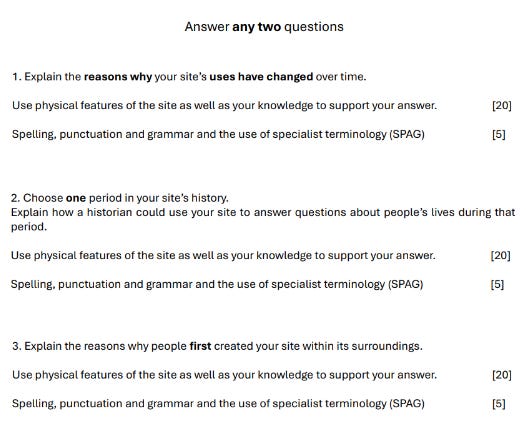
I chose Question 1 because being able to write confidently about change is a key aspect of the History Around Us course but also I want to test whether they have taken on board the advice of decoding questions as a very common pitfall on this question is to ignore the causal element and simply describe how the site has changed through time. I need to check which students might have a tendency to do this. I also want to check that they know to write about the English Civil War when writing about change for our site which is Helmsley Castle.
I choose Question 2 because I need to check they know how to tackle a ‘choose a time-period’ question. I also want to know if they’ve followed my ‘hack’ for this question about choosing the 14th Century as it’s by far the easiest time period to choose for Helmsley Castle.
I choose Question 3 because ‘first use’ is a specific type of question for which they have to write about the time-period of Walter Espec. I need them to know this topic well as it’s the only type of question where they define a specific time-period.
This example shows how selecting specific question types helps you to strategically think about what lessons both the students and the teachers can learn from the mock experience.
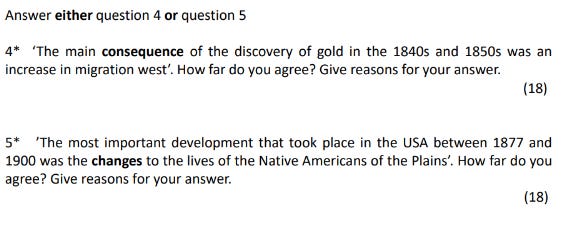
Similarly for the Making of America paper I chose these two essay questions because I want to check their understanding of Enquiry 5 (American Cultures 1877 to 1900) because they often don’t revise this properly (Question 5). I also chose Question 4 because again it’s a question that needs careful decoding and I know that not decoding questions properly is a key reason for students underperforming - so I need to see who needs more support with this.
Individual Feedback for the mock
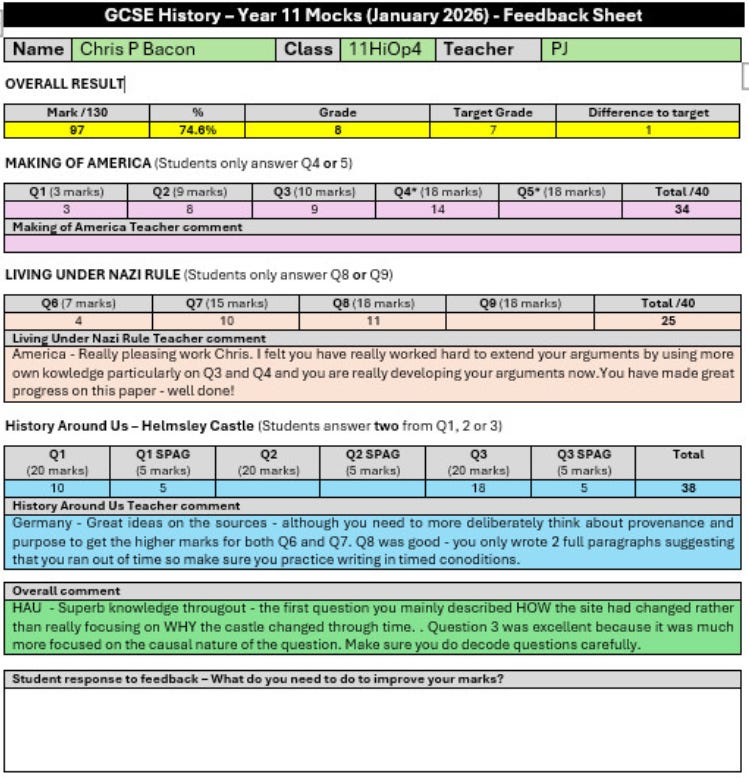
Year on Year my students complain to me that they can’t read my writing. It also struck me that when I write my valuable feedback on paper and give it to the students that knowledge and precise target I’ve given students is often lost to me. Such is the value of feedback to something like a mock that I need to be able to have my precise thoughts at my fingertips. This year I inputted all marked and comments for each paper onto a spreadsheet and then used MailMerge to put it onto a word document. This enabled me to create a typed up feedback sheet but one that crucially I could retain a digital copy of. The feedback not only looked better but also was much more readable for students. Here is an example and I can confirm for GDPR reasons that this is not a real student but if they were they would make a fantastic breakfast!
Whole Class Feedback for the Mock
Alongside this I populated a whole class feedback report for each paper as well as a sheet for students to more metacognitively reflect on their learning. There is a copy below. The idea for this is to try to breakdown and summarise key whole class feedback points in a simple way. The sheets contain QR codes which will take students to a video explainer of the whole mock for those who want a more detailed explanation. The advantage being students can be selective over which topic or indeed question they go through. Students have to write down for each topic what they need to work on.

Using CoPilot to generate Whole Class Feedback
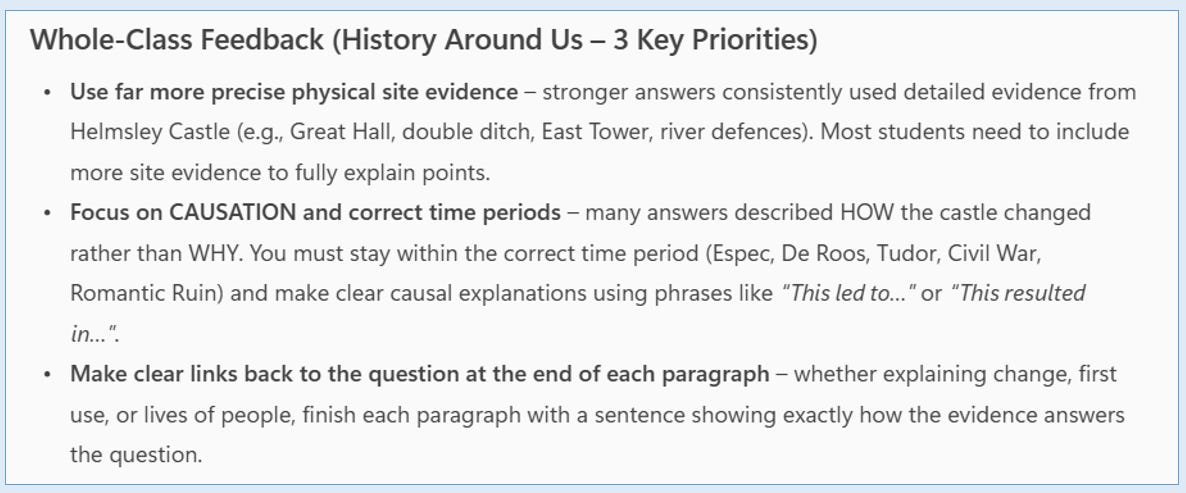
I was also able to look at the data in Excel and analyse my own written comments on a whole class level in order to generate some whole class feedback using CoPilot. This was incredibly useful to crystallise thinking and look for patterns in my own comments. Although some of this was not a total surprise it was still another useful way to think about Whole Class Feedback. Here are the three points it gave me for the History Around Us paper
Forms Survey
From here I also do a Forms Survey so that students can give feedback on the mock process and also give feedback on what they think they need to work on between now and the final GCSEs. This helps me shape the revision period for students and for me to gauge which topics students feel more or less confident on and what revision strategies they are finding useful.
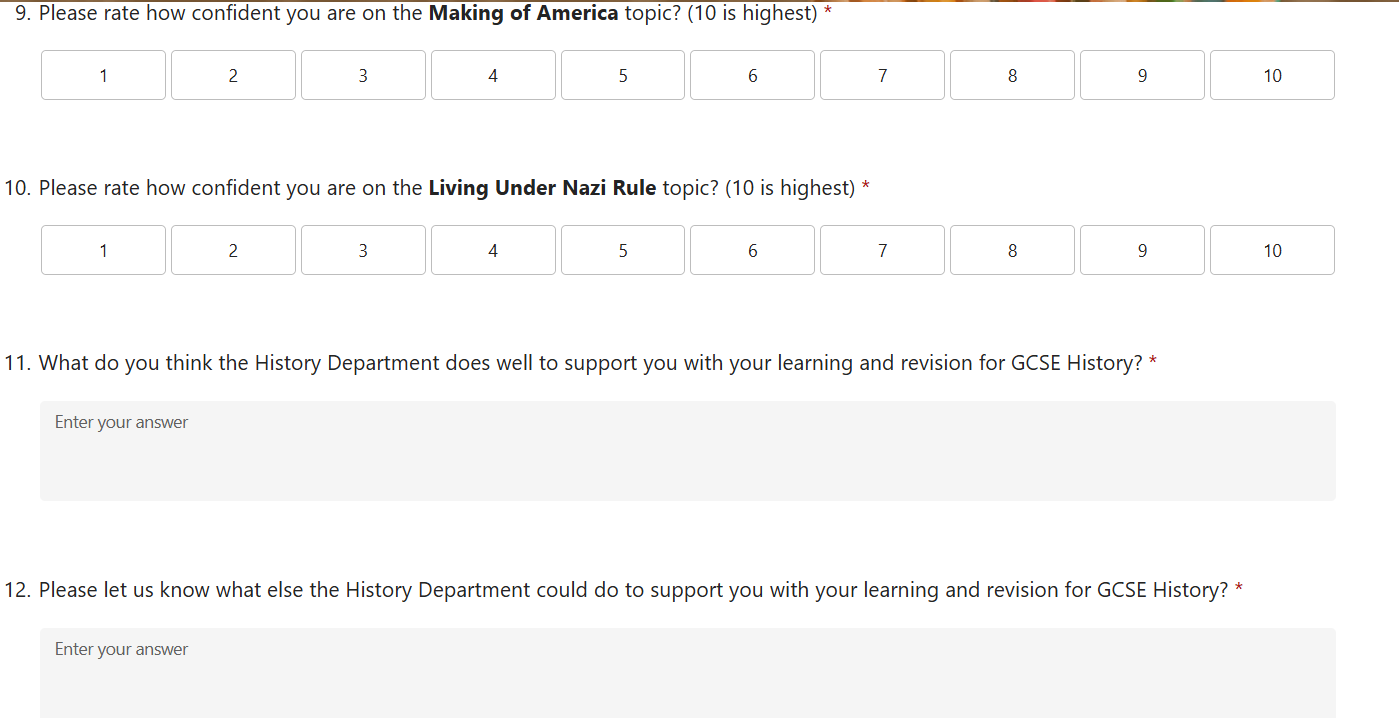
The mock exam is highly useful for gathering such useful feedback and crucially informing the next steps for teaching and learning within the classroom and planning for revision.
I would love to hear your ideas on how you use the mock exam.