What makes a great revision programme for GCSE History?
Curating an impactful revision programme

As we reach the point in the year when GCSE History courses are drawing to a close, our attention naturally turns to the final revision programme and the design of our revision lessons. These sessions play a crucial role in helping students consolidate their knowledge, address misconceptions, and practise the skills needed for exam success. Getting revision right — both in the classroom and at home — can make a significant difference to student confidence and outcomes.
This blog sets out some key principles for effective revision and illustrates how these ideas can be translated into a practical, classroom-ready revision lesson.
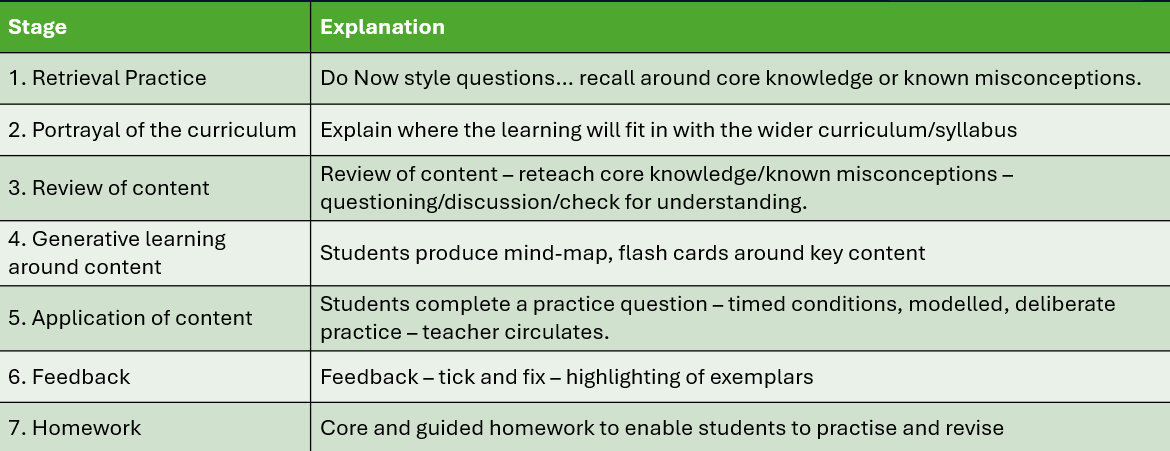
Being clear on how to revise
Students need explicit, repeated guidance on how to revise effectively. Even older students often lack a secure understanding of what high‑quality revision looks like. It’s therefore essential that we:
teach and re‑teach evidence-informed revision strategies
model these approaches regularly in lessons
show explicitly what effective revision notes, mind‑maps, flashcards, or plans look like
help students avoid low‑impact methods such as passive re-reading or watching random TikTok videos!
When we give students the tools and the techniques, they are much more likely to revise efficiently and with purpose.
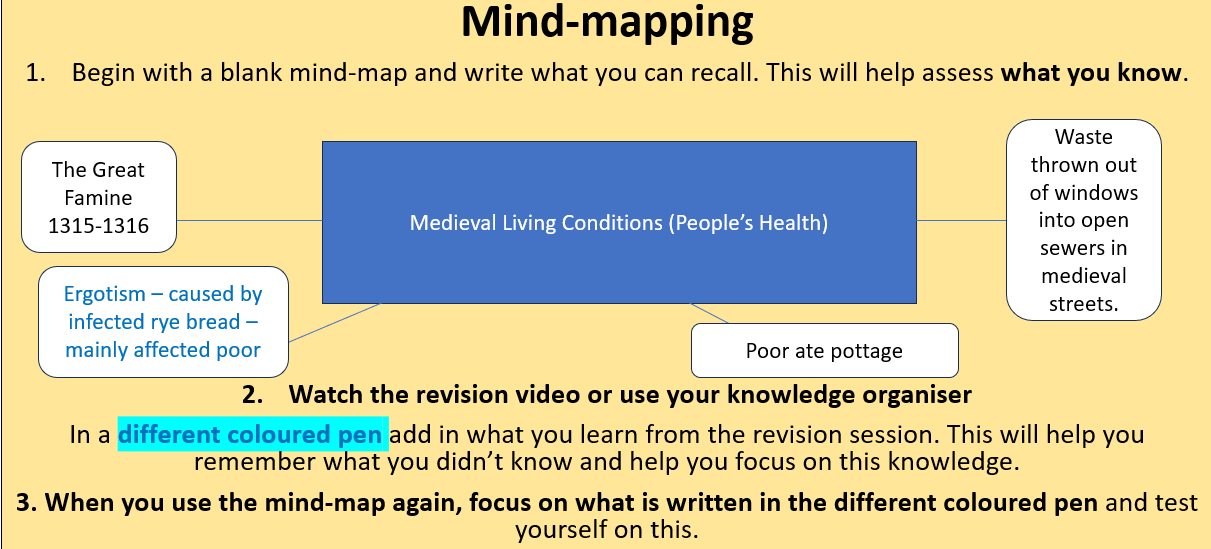
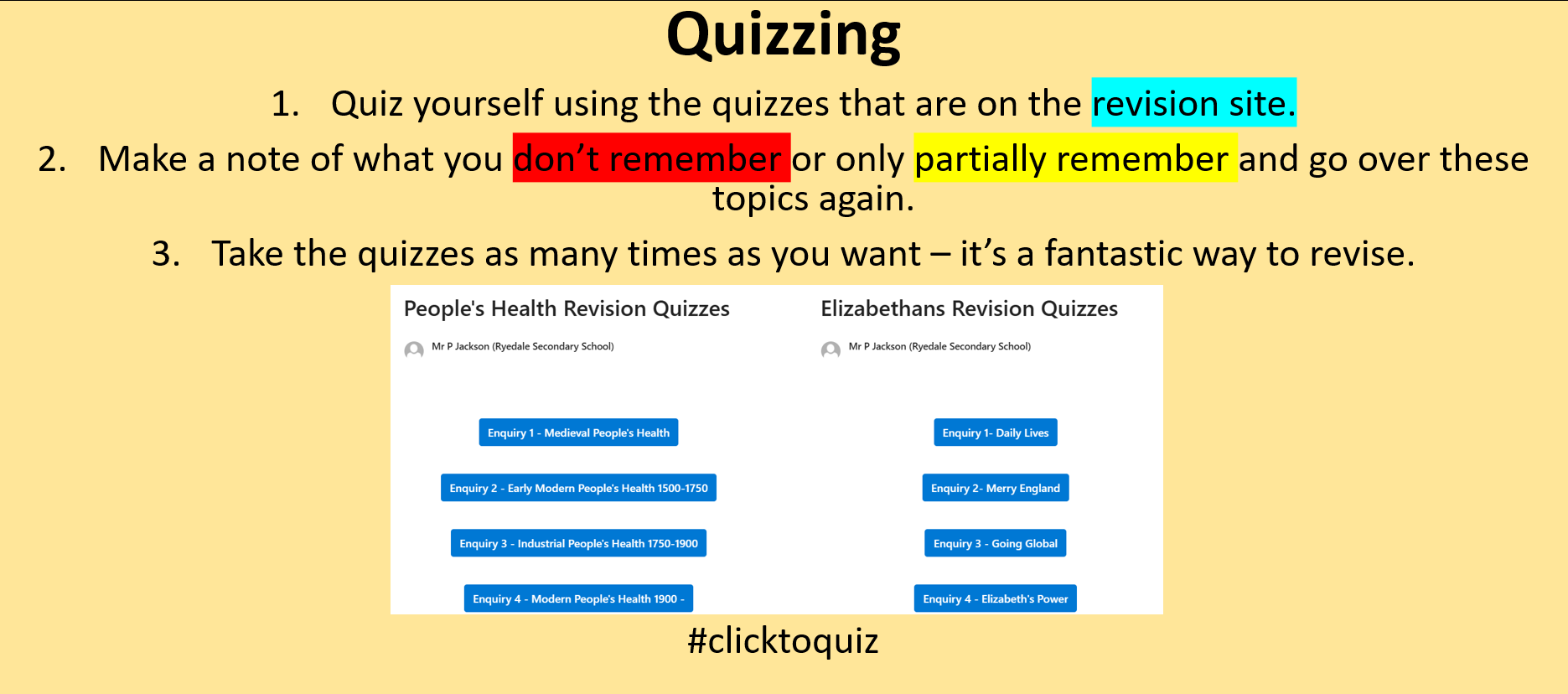
Being really clear on what resources to use
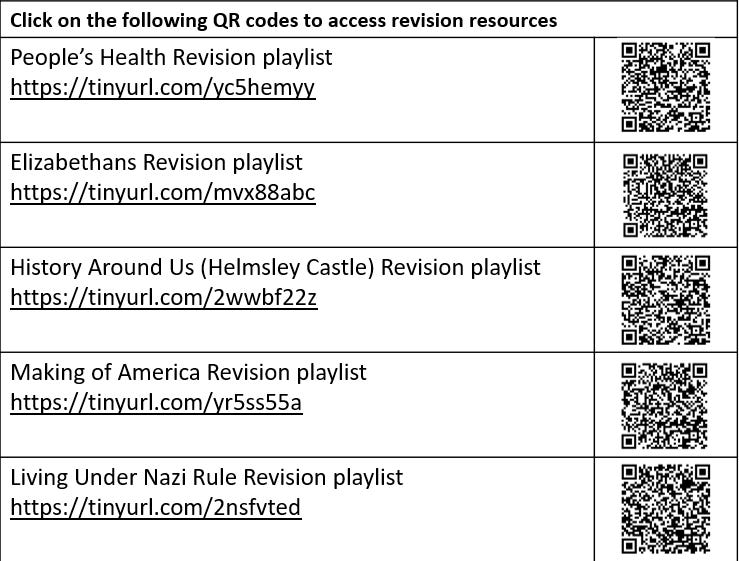
The sheer volume of online content now available means that students can easily end up using materials that are inaccurate, incomplete, or simply not aligned with the specification. Clarity is essential.
To help with this, we provide:
QR codes linking directly to approved resources
TinyURLs for specific revision pages or videos
paper copies of knowledge organisers for easy reference
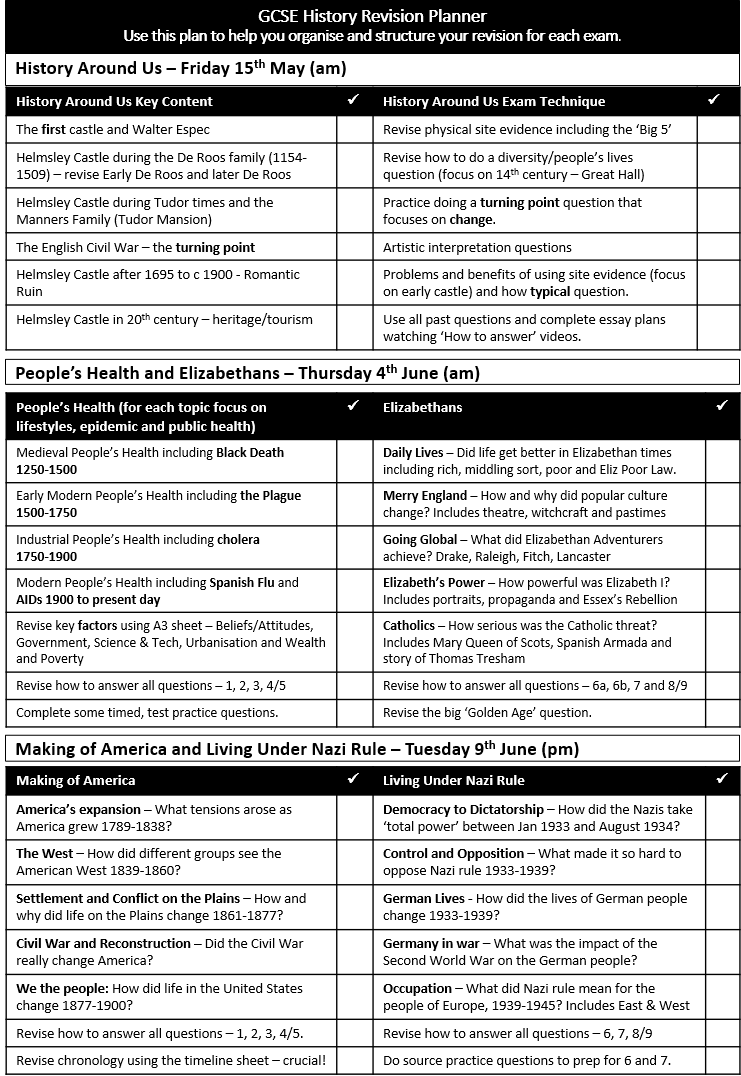
checklists to guide them through the essential content
Through this we ensure students spend their time revising the right material in the right way.
Being clear on what to revise
GCSE History is content-heavy across all exam boards, so students benefit from a structured route through the material. A clear revision map helps students break the course down into manageable chunks.
Pedagogical thinking
This a really interesting blog on effective revision strategies - EEF Revision
The EEF’s guidance on effective revision offers a helpful framework, emphasising strategies such as retrieval practice, spaced practice, dual coding, and addressing misconceptions.
When designing revision sessions, it’s important to think not only about what we teach but how students process, retrieve, and practise this knowledge. In this blog, I outline how these principles shaped a revision lesson for the OCR B unit People’s Health in Britain.
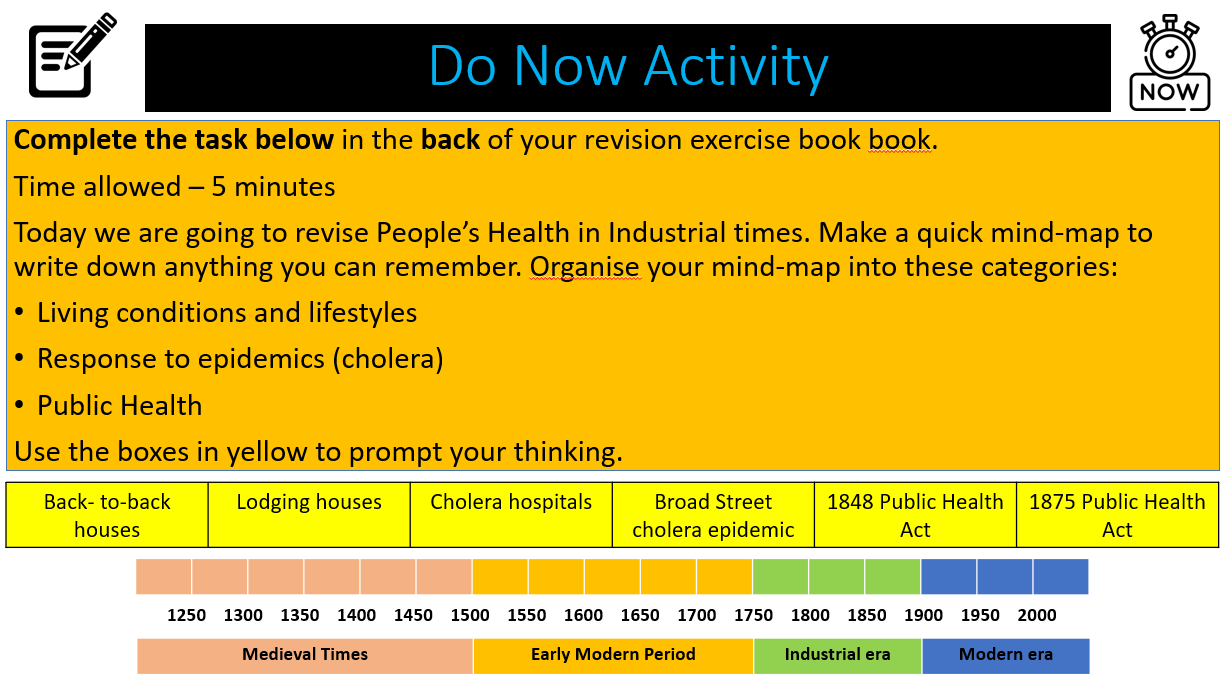
Retrieval Practice
Every revision lesson begins with deliberate retrieval. A simple Do Now task could involve students starting a mind-map with a few key prompts. This warms up prior knowledge, exposes gaps, and prepares students for new input.
Retrieval should be:
low-stakes
fast-paced
knowledge-focused
repeated regularly
This builds stronger long-term memory and gives students confidence heading into the rest of the lesson.
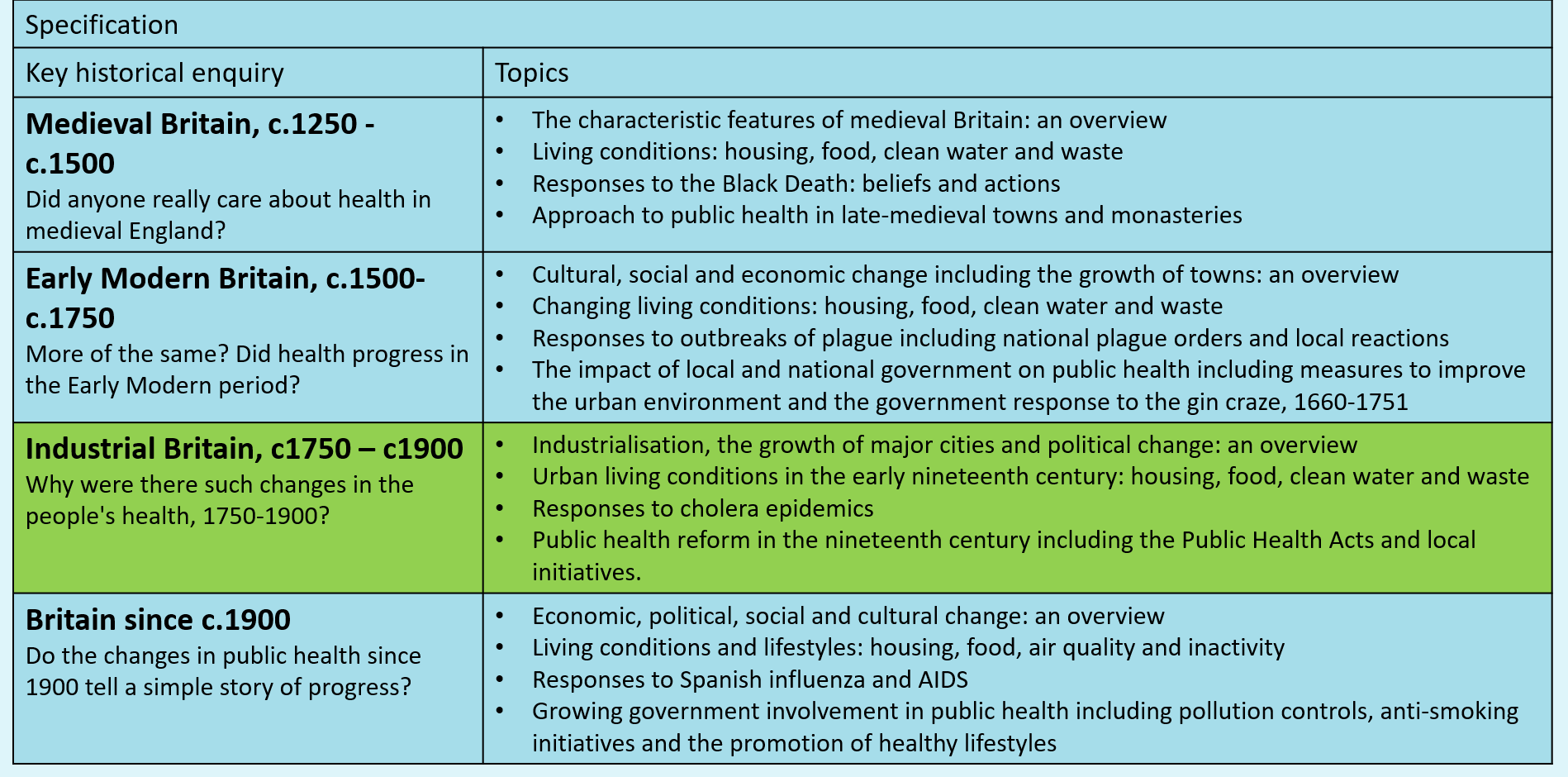
Portrayal of the curriculum
It’s important for students to see where the lesson fits within the bigger picture. Showing the syllabus overview or topic structure helps them understand the story of the course and how different events and developments link together. This reinforces coherence and supports long‑term retention.
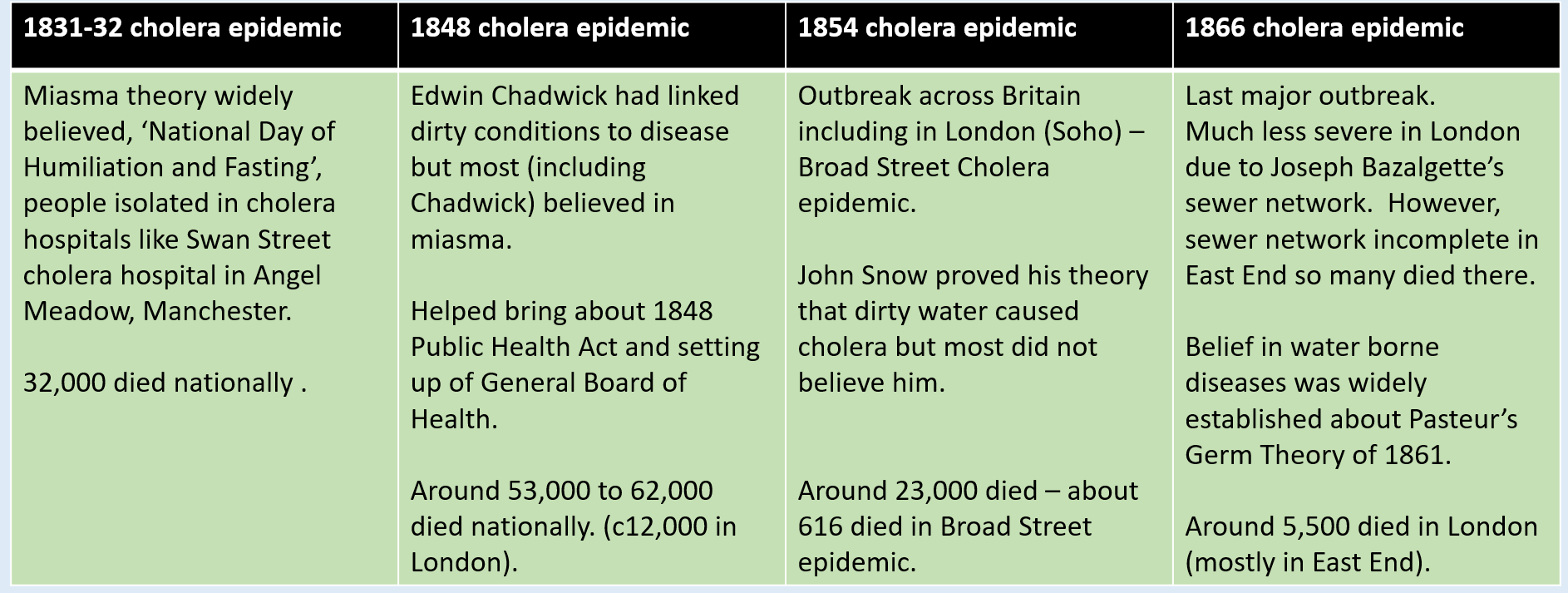
Review of content
After retrieval, the lesson moves into a focused review of essential content. This may involve reteaching an element identified through:
mock exam analysis
QLA data
student voice
common misconceptions
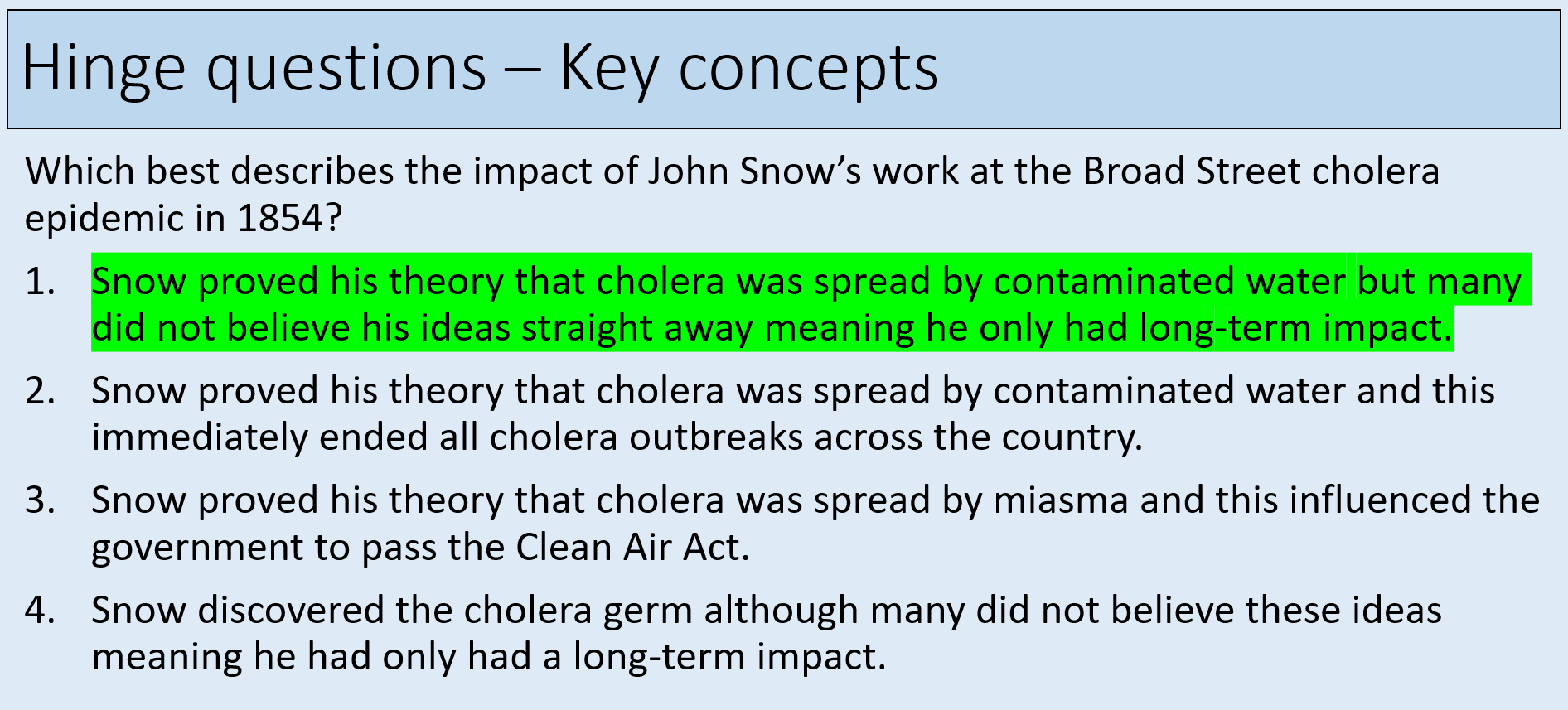
In this example, students needed a refresher on responses to cholera epidemics, so we used a comparison table and added key points to the mind-map they began in the Do Now.
We would then use hinge questions to check for understanding.
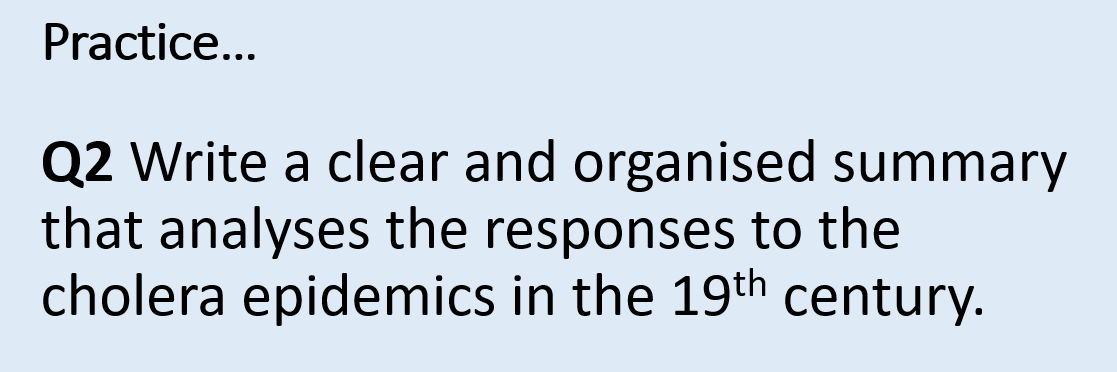
Students then complete an exam-style practice question under timed conditions to replicate the experience of the real exam. At this stage they are working:
mostly independently
with minimal scaffolding
supported through selective live marking or targeted intervention
This builds students’ stamina and exam confidence.
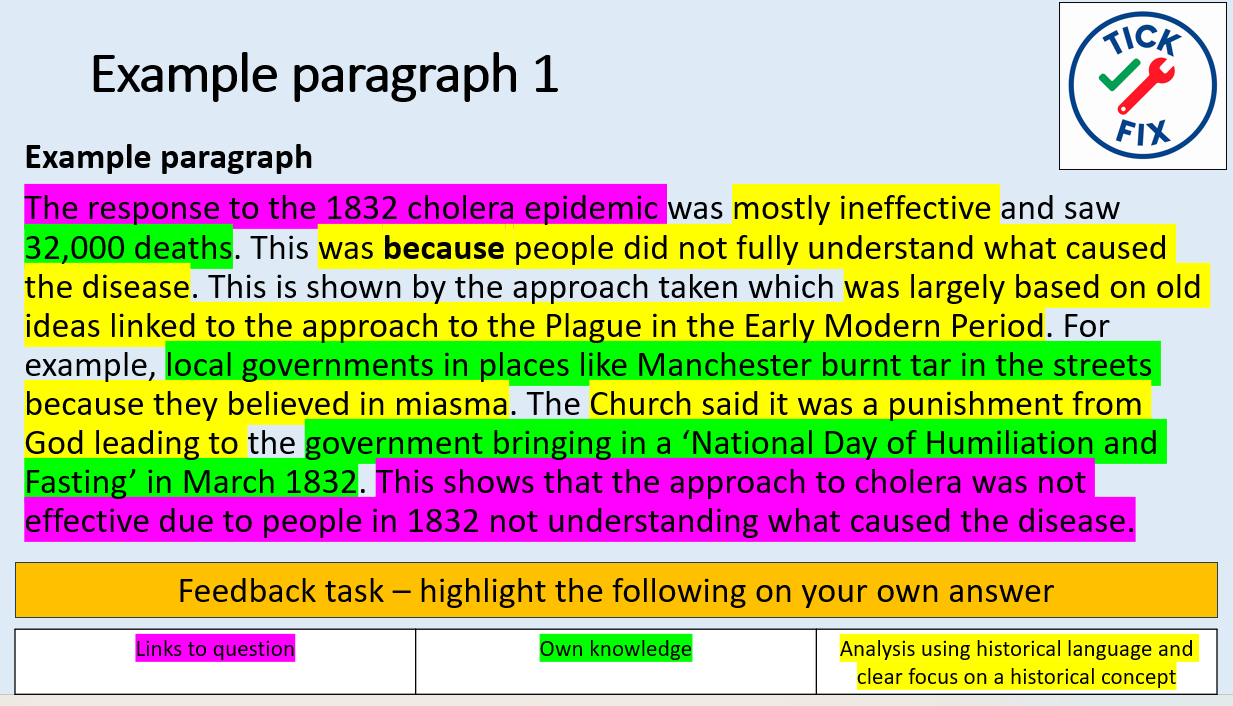
Feedback - ‘tick and fix’
Students then mark or annotate their own work using clear highlighted success criteria. “Tick and fix” encourages:
active engagement with feedback
immediate correction
awareness of strengths and areas for improvement
This strengthens their metacognition and helps them internalise exam expectations.
Homework
Homework continues the learning beyond the lesson. A Microsoft Forms quiz on Industrial People’s Health allows rapid assessment of core knowledge and makes it easy to identify which students — or which concepts — need further reteaching. This ensures the revision programme remains responsive right up to the exams.
Conclusion
A strong revision programme is built on clarity, structure, and evidence‑based pedagogy. Effective revision lessons combine retrieval, modelling, targeted reteaching, practice, feedback, and structured homework. When these elements come together, students feel more confident, more prepared, and more capable of performing at their best.
What are your most effective strategies for revision lessons? I’d love to hear what works in your classroom.